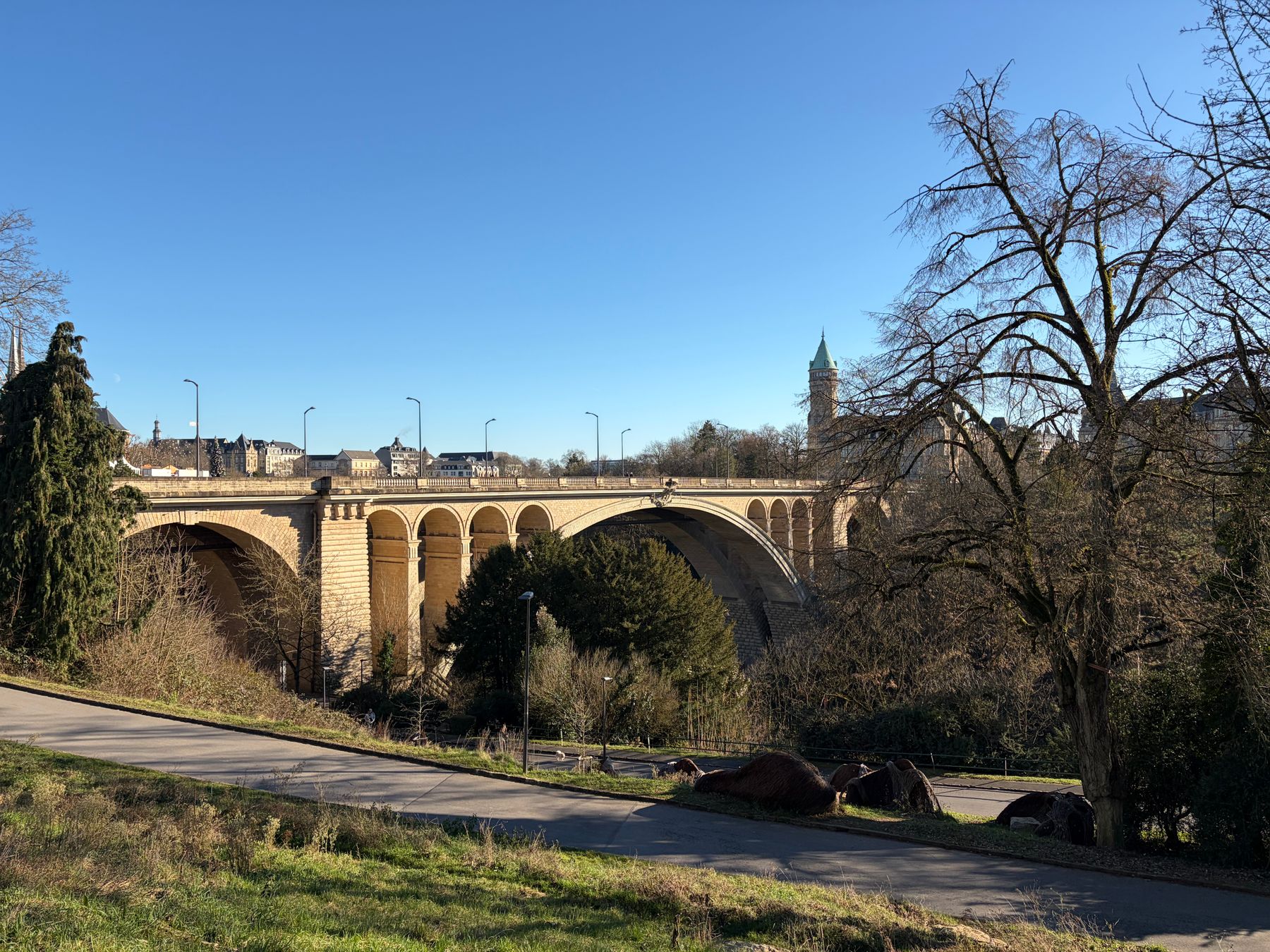
Base yourself in the city, not the countryside
For a week without a car, stay inside the capital and treat the country as day trips. The most practical districts are Gare and Bonnevoie, five to ten minutes' walk from Luxembourg railway station, and Limpertsberg or Belair, quieter and ten to fifteen minutes' walk from the centre. Ville Haute and Grund are lovely but you pay for the postcard. Every train line in the country radiates from the station, so a hotel near it saves you a taxi on arrival and turns early departures to Echternach or Clervaux into a coffee, not a crisis.
Rates in Luxembourg City run higher than in the north or the Moselle. Expect the widest choice and the highest prices around the station and Kirchberg, where business travellers keep midweek occupancy firm; weekends soften in the centre. If you are booking a week, compare a city hotel with a base in Ettelbruck or Wasserbillig and count the daily train time honestly. For most first visits, the city wins: you can reach Vianden, Remich or Clervaux in under an hour and still eat dinner in town.
What transport really costs across a week
Since March 2020, standard second-class trains, trams and buses across Luxembourg are free, including the domestic network and the TGV connection to Thionville. That single fact reshapes a week's budget: seven days of commuting from the capital costs nothing at the ticket machine. What you still pay for is the airport bus if you choose a route outside the free network, taxis after midnight, cross-border trips into Belgium, France or Germany, and any car hire. A week's rail pass is unnecessary; you need a plan, not a ticket.
Where money does go is the car. If your week includes the Mullerthal Trail or the Ardennes around Wiltz, a hire car for two or three days beats negotiating bus timetables to trailheads. Compare a compact rental for a short block against a week of parking in the city, which is rarely cheap. The Pfaffenthal and Glacis car parks are central and well signed. My recommendation: free public transport all week, one car for the Mullerthal days only, and skip the car for Vianden, Echternach and Remich, all comfortably served by train and bus.
Which day trips earn their place
Clervaux is an hour by train from Luxembourg station, changing at Ettelbruck, and gives you the castle, the UNESCO-listed Family of Man photographic exhibition and a small-town lunch. Vianden is around an hour and a quarter by bus from Ettelbruck or Diekirch, with the hilltop castle and the Victor Hugo house; go on a weekday, since Sunday buses thin out. Echternach, reached by bus from the station in roughly forty-five minutes, has the abbey, the lake and the start of the Mullerthal's rock formations. Remich on the Moselle is a relaxed wine-village afternoon, best between May and September.
Luxembourg City itself deserves two full days, not one. Walk the Chemin de la Corniche, ride the Pfaffenthal glass lift, see the Mudam and the Casemates, and cross to the Grund for an evening. The MUDAM and national museums close on Mondays, so keep that day for the north. Skip the tourist train in the old town and the overpriced place d'Armes terraces; eat in Bonnevoie or Clausen instead. In December, the Christmas markets make the centre busy and hotel rates climb, so book early or come in late September or May.
Building the seven-day budget
Split the week into blocks: three nights in Luxembourg City for arrival and the old town, two nights in Ettelbruck or Vianden for the Ardennes, and two nights back in the city or on the Moselle at Remich. Moving hotels twice costs time, so many travellers simply keep one city room and day-trip, which is easier on luggage and often cheaper overall. Book the city hotel first, then build the trips around the free rail network. A week that mixes a station-area hotel with one night in the north is a sensible compromise.
Budget in bands, not figures: accommodation is the large variable and food the small one. Restaurant lunches in the city centre cost more than a bakery lunch, and supermarkets in Gare and Bonnevoie make self-catering easy. Keep a modest reserve for taxis, a possible car hire and one good dinner. Book accommodation with free cancellation and recheck rates four to six weeks out. Midweek arrivals from Tuesday to Thursday are usually the calmest, and September and early October give long walking days without the summer crowds.
Related articles
Questions, answered
Is public transport in Luxembourg really free?
Yes. Since 1 March 2020, second-class trains, trams and buses on the domestic network are free for residents and visitors. Standard cross-border trains to Thionville and into Belgium, France and Germany are included to the border, but onward travel is ticketed.
Do I need a car for a week in Luxembourg?
Not for the capital, Vianden, Echternach, Clervaux or Remich, all reachable by free train and bus. Hire a car for two or three days only if you plan to walk the Mullerthal Trail or explore rural Wiltz, and compare it against city parking costs.
Which neighbourhood should I book in Luxembourg City?
Gare and Bonnevoie suit rail-based itineraries and have good-value rooms. Limpertsberg and Belair are quieter and walkable to the centre. Ville Haute and Grund are atmospheric but pricier. For a first week, I would book near the station and walk or take the tram.
How long does it take to reach Vianden and Clervaux?
Vianden takes about an hour and a quarter by bus from Ettelbruck or Diekirch, both reached by train from the capital. Clervaux is roughly an hour by train, changing at Ettelbruck. Check Sunday timetables, when rural services are less frequent.
When is the best month for a walking-focused week?
Late September and early October are ideal: mild weather, long daylight and fewer crowds on the Mullerthal trails. May and June are also good. July and August are warmest but busiest, and December centres on Christmas markets, when city hotel rates rise.
What should I skip to keep costs down?
Skip the old-town tourist train, the most expensive terraces on place d'Armes, and a car for the whole week. Eat lunch from bakeries, use free transport, and put your budget into one good dinner and a short car hire instead.
Are museums open every day?
Most national museums, including the Mudam, close on Mondays. Plan city sightseeing for Tuesday to Sunday and use Monday for Vianden or Echternach, where the castle and abbey grounds remain accessible even when indoor sites are closed.
Doing good is the business: every booking through Stay Luxembourg funds one verified tonne of carbon removal — same room, same price, no markup.
Start Your Search