Moselle Wine Route
42 km of terraced Riesling and Pinot vineyards along Luxembourg's slow bend of the Moselle river.
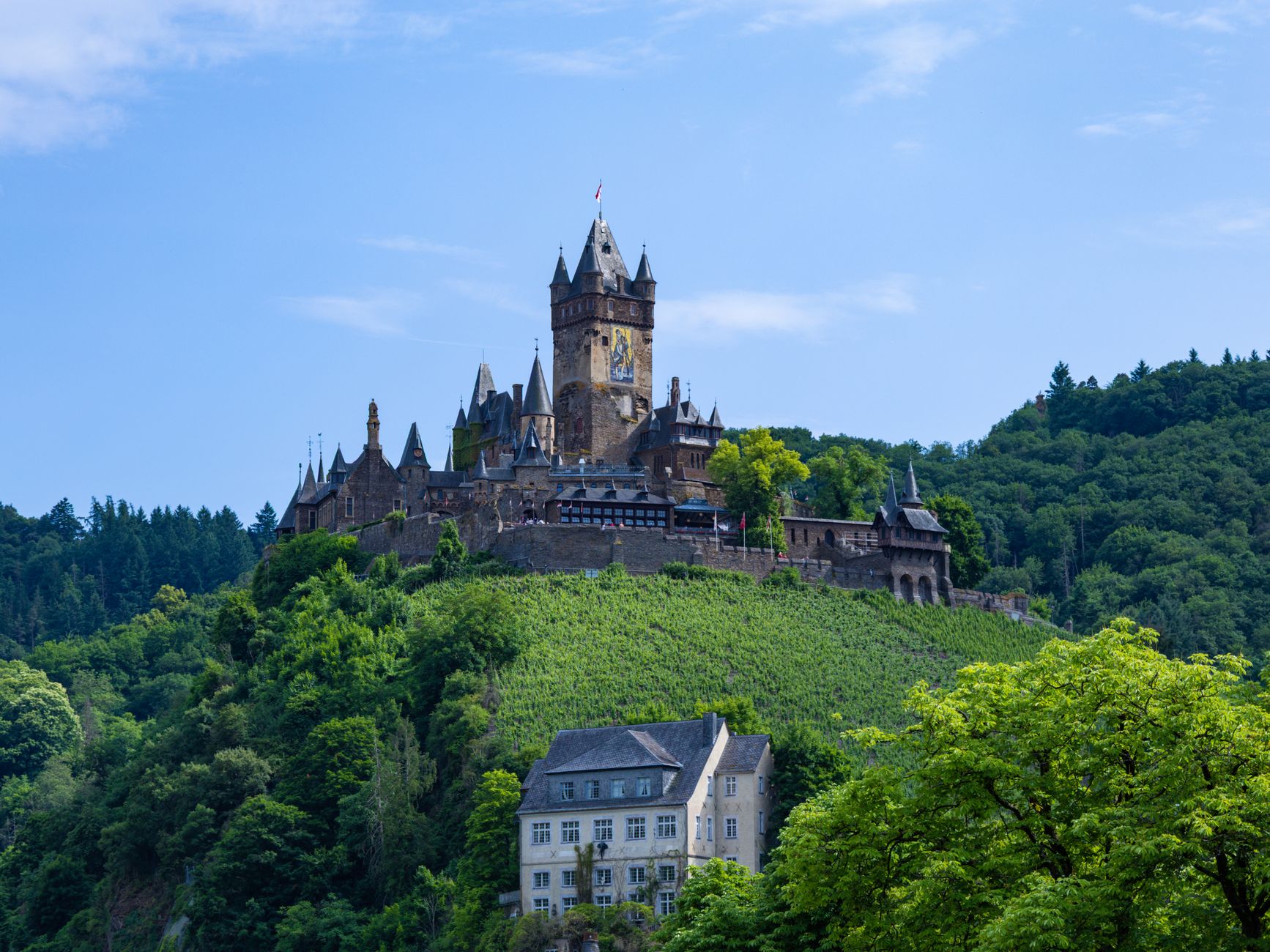
The Luxembourg Moselle Wine Route runs 42 km along the west bank of the river between Schengen in the south and Wasserbillig in the north, forming the eastern border with Germany. Wine has been made here since Roman times, and the region specialises in cool-climate whites — Riesling, Pinot Gris, Auxerrois, Elbling and Rivaner — plus a serious sparkling wine tradition, Crémant de Luxembourg, made in the same method as Champagne. The Route Nationale 10 hugs the river and passes through a dozen wine villages, and it is one of the loveliest and least crowded wine drives in Europe.
Key stops for tastings include the cooperative Domaines Vinsmoselle in Wormeldange (largest producer, €10 tour and tasting), Domaine Alice Hartmann next door (top-end estate, book ahead), Château de Schengen area for the small independent cellars around Wintrange, and Bernard-Massard in Grevenmacher for its impressive Crémant cellars (€8 tour ending in a flute). Cycling the flat riverside PC3 cycle path is the alternative to driving — bike hire from Rentabike Miselerland (€15 a day) at Remich and Grevenmacher.
Come in September for the wine festivals in Grevenmacher (first weekend) and Wormeldange (second weekend). Otherwise late spring and early autumn are best. Do not attempt to drive if tasting — the Luxembourg drink-drive limit is 0.5 g/l and enforcement is strict. Instead park in Remich, cycle north, and take the free bus 175 back. Lunch options include the classic Riesling and fried fish at Restaurant De Jangeli in Wormeldange or the terrace at L'Ecluse in Stadtbredimus.
Start in Remich and work north, because the geography does the sequencing for you. Remich's Esplanade is a kilometre of riverside promenade holding the bus station, the boat landing and a row of terrace brasseries. Fifteen minutes' walk south along Rue de Stadtbredimus, Caves St Martin keeps its sparkling wine in galleries cut into the limestone cliff in the 1920s at a steady 12 to 14 degrees; the walk-through lasts about 45 minutes and ends with a glass, from around €8. North of there the terraces close in over the road: Stadtbredimus, Greiveldange, then Ehnen, whose cobbled round village core is the prettiest ten minutes on the whole route. Above Wormeldange the Koeppchen slope is the country's most famous Riesling site, with a chapel and a bench-height view reached by a steep 20-minute climb from the church. Ahn sits in a natural amphitheatre of terraces; Machtum's bend gives the widest water view before Grevenmacher's cellars and river lock.
Plan two cellars, not four. Each proper visit runs 45 to 75 minutes with the walk between, and palate fatigue after eight or nine wines is real. Book the small family estates three to seven days ahead by email or phone — Alice Hartmann in Wormeldange, Sunnen-Hoffmann in Remerschen, Schmit-Fohl in Ahn — because the person pouring is usually the person pruning, and nobody is standing by a reception desk. Walk-in works at Vinsmoselle Wormeldange and at Bernard-Massard in Grevenmacher, which is built for visitors. Skip the final 8 km from Mertert to Wasserbillig: it is a working river port with gravel silos, not vineyard. The Musée du Vin in Ehnen has been closed for a long renovation in recent years, so check before detouring for it. And accept that the N10 is a busy two-lane road carrying lorries between Luxembourg and Trier, not a silent Tuscan lane.
Getting there is genuinely easy and genuinely free: all Luxembourg public transport is free in second class. Bus 175 leaves from the quays outside Luxembourg City's Gare and reaches Remich Gare Routière in 35 to 40 minutes, roughly every half hour on weekdays and hourly at weekends. From Remich, bus 450 runs north through Stadtbredimus, Ehnen, Wormeldange, Ahn and Machtum to Grevenmacher in about 35 minutes end to end, stopping in each village within a few minutes' walk of its cellars. A second approach: CFL train line 30 from Luxembourg to Wasserbillig takes 35 to 40 minutes, and you work south from there. Driving from the capital is 25 km via the A1 and N2, about 30 minutes, with large riverside car parks on the Remich Esplanade and along the Grevenmacher quay. Check the last evening bus before you order a second tasting — services thin out sharply after about 20:00.
Costs stay modest if you buy at source. A standard tasting of three wines starts at €6, guided cellar tours with four or five wines run €10 to €15, and you leave with bottle prices no shop can match: €8 to €15 for a good dry Riesling or Auxerrois, €10 to €14 for a bottle of crémant, €20 to €30 for a single-vineyard grand premier cru. At small estates the tasting fee is often deducted if you take two bottles home — ask before paying. Bike hire is €15 a day, more for an e-bike. Lunch is €18 to €25 for a plat du jour, €35 to €45 for three courses with wine. A Moselle boat trip out of Remich costs in the low teens in €, and village museums along the route charge €5 to €7. Budget €50 a head for a full day including lunch and a bottle.
Timing matters more than any other decision here. Cellars open at 10:00 and the first 90 minutes are when you get the winemaker's undivided attention; coach groups and stag-adjacent minibuses arrive mid-afternoon, and last tastings are usually taken 30 to 60 minutes before the 18:00 close. Monday is the dead day, and several estates add Sunday. Late May to late June is the best window: vines in leaf, terraces open, and the Wine Taste Enjoy open-cellar weekend at Pentecost puts dozens of producers behind a table at once. September brings harvest energy and the festivals, though during the picking weeks in late September and October some growers suspend tastings entirely. November to March is honestly grim — bare terraces, wind funnelling up the river, riverside restaurants shut and most small cellars open only by appointment.
It suits slow travellers, cyclists and anyone happy to spend two hours talking about soil. Families do better than expected in Remich, where the promenade, the boat landing and the ice cream stands carry an afternoon, and the Jardin des Papillons in Grevenmacher (open April to mid-October, around €7 for adults) is a ten-minute walk from Bernard-Massard. Teenagers will be bored inside cellars — send them to the PC3 path. Wheelchair users should note that cellar tours mean stairs, gravel and cobbles, while the flat asphalt cycle path and the Remich Esplanade are the accessible parts. Rain changes nothing: the good bits are underground. With only an hour before a train, do not attempt it — the bus alone is 40 minutes each way. Fold in the free European Museum at Schengen, the A Possen folklore and wine museum in Bech-Kleinmacher, or Mondorf-les-Bains thermal baths, 15 minutes west of Remich.
Hours & entry
Route open 24 hours · Most cellars Tue-Sat 10:00-18:00 · Many closed Mon
What to see
{'what': 'Vinsmoselle Wormeldange cellar tour', 'where': 'Route du Vin 32, Wormeldange'}
{'what': 'Bernard-Massard Crémant cellars', 'where': 'Route du Vin 22, Grevenmacher'}
{'what': 'Schengen Museum and vineyard views', 'where': 'Schengen village, southern end of the route'}
Tips from the ground
Cycle rather than drive if tasting — free bus back from any wine village
The €12 Vinothek pass gets you tastings at 6 cellars over a weekend
Buy directly at the estate for the best prices — €8-15 for a good Riesling
Questions, answered
Cost of the route?
The route is free. Individual cellar tours €6-15. Standard tastings from €6 for three wines. Bottles bought at the estate run €8-15 for a dry Riesling or Auxerrois, €10-14 for crémant and €20-30 for a single-vineyard cru. Bike hire is €15 a day, buses and trains are free, and lunch is €18-25 for a plat du jour. Budget €50 a head for a full day. At small family estates the tasting fee is often waived if you buy two bottles — ask first.
Any free tastings?
Some smaller producers offer free tastings if you buy a bottle. Domaines Vinsmoselle occasionally has free open-cellar Sundays in September. The Wine Taste Enjoy open-cellar weekend at Pentecost opens dozens of cellars at once, though most charge a few € per glass or sell a tasting glass at the door, and festival stands in Grevenmacher and Wormeldange work the same way at around €3-4 a pour. Do not build a day around free wine — the value here is the €8-15 bottle price, not the pour.
How long?
Half a day for 2-3 cellars, a full day for 4-5 plus lunch. Full route drive: 90 minutes non-stop. Cycling Remich to Grevenmacher is 20 flat km, about 1 hour 30, and the whole Schengen-Wasserbillig run takes 3-4 hours. Allow 45-75 minutes per cellar visit including the walk between. Door to door from Luxembourg City, two cellars and lunch realistically eats 6-7 hours once the 35-40 minute bus each way is counted.
Closed days?
Most cellars closed Mondays; some also Sundays. Vinsmoselle Wormeldange open Tue-Sun. Last tastings are generally accepted 30-60 minutes before the 18:00 close, so arriving at 17:45 gets you nothing. From November to March many small estates receive visitors by appointment only, and during the harvest weeks in late September and October some suspend tastings while picking. Bernard-Massard runs its visitor tours mainly in the warmer months, and the week around Christmas and New Year is shut across the region.
Book ahead?
Yes for premium estates (Alice Hartmann, Sunnen-Hoffmann). Walk-in fine for cooperative cellars. Three to seven days by email or phone is enough for a couple; groups over six should allow two weeks, and the Pentecost open-cellar weekend or September festival weekends want two to three weeks. Book Sunday lunch at riverside restaurants such as Mathes in Ahn, and reserve bikes at Rentabike Miselerland in July and August. Small estates are family-run, so a no-show costs someone their afternoon — call if plans change.
How to get there?
Bus 175 from Luxembourg City Gare to Remich (35 min, free) then bus 450 north along the wine route. All Luxembourg public transport is free in second class, and 175 runs roughly every 30 minutes on weekdays. Bus 450 links Stadtbredimus, Ehnen, Wormeldange, Ahn and Machtum with Grevenmacher in about 35 minutes. Alternatively take CFL line 30 to Wasserbillig (35-40 min) and work south. Driving is 25 km and 30 minutes via the A1 and N2, with riverside parking at Remich. Check the last evening bus before your second tasting.
Doing good is the business: every booking through Stay Luxembourg funds one verified tonne of carbon removal — same room, same price, no markup.
Start Your Search